
Epoxy Flooring by Epoxyman Industrial Coatings
Professional epoxy flooring solutions built for South African industrial, commercial, and residential environments.
5 Highlights on Epoxy Flooring
- Exceptional durability – Epoxy flooring bonds directly to the concrete substrate, creating a hard-wearing surface that resists heavy foot traffic, forklift loads, and chemical spills common in South African industrial facilities.
- Chemical resistance – The resin and hardener combination in epoxy flooring forms a non-porous finish that repels oils, acids, and cleaning agents without degrading the surface over time. This level of chemical resistance is essential in environments where floors are regularly exposed to harsh chemicals and treated with industrial cleaning solutions.
- Seamless, smooth finish – Epoxy flooring delivers a smooth, joint-free surface that’s easy to clean and keep hygienic, making it a top choice for warehouses, factories, and retail floors across Johannesburg, Cape Town, and Durban.
- Aesthetic range – Available in solid colours, flake systems, and metallic finishes, epoxy flooring suits both performance-driven and design-focused flooring requirements. Our team can assist you in finding the right system to match your facility’s needs.
- Fast cure times – Many epoxy flooring systems cure within 24 to 72 hours, reducing downtime for businesses that can’t afford extended floor closures. Please note that cure times may vary based on ambient temperature and humidity conditions on site.


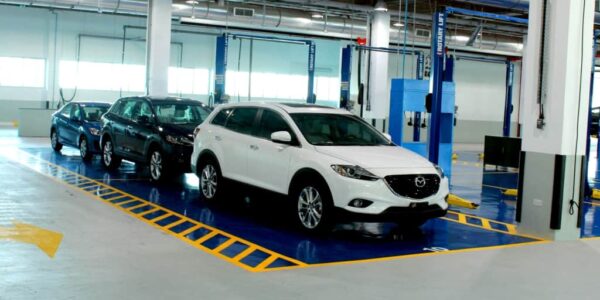

Why Choose Our Epoxy Flooring
Epoxyman Industrial Coatings is a trusted flooring contractor with a proven track record installing epoxy flooring across South Africa’s most demanding environments. We work in warehouses, food processing plants, retail spaces, garages, and commercial buildings where floor performance isn’t negotiable.
Our team understands that no two substrates are the same. We assess each floor’s condition before recommending a flooring system. Concrete moisture levels, surface profile, and existing coatings all affect the final result. We don’t cut corners on surface preparation because poor prep is the leading cause of epoxy flooring failure.
We use professional-grade resins and hardeners from top-rated brands, and we apply them to manufacturer specifications. Every flooring system we install meets the performance requirements of the environment it’s designed for. When you want a flooring solution that will back your business operations for years to come, you need a company with the experience to deliver the right result first time.
Our epoxy flooring services cover the full process – from grinding and priming to topcoat application and final inspection. We offer detailed quotes upfront, with no hidden costs and no unexpected charges you may incur after work begins. Our rates are competitive across Johannesburg, Cape Town, and Durban, and we work with both large industrial clients and individual homeowners.
When you choose Epoxyman Industrial Coatings, you get a qualified flooring contractor who will have a dedicated team on site who delivers on time, installs correctly, and stands behind the work. We help you address your flooring needs efficiently so you can stay connected to what matters most — running your business.
Signs You Need Epoxy Flooring
- Your concrete floor is cracking or dusting – Bare concrete floors deteriorate over time. If your floor is producing fine dust, showing surface cracks, or breaking down under traffic, it’s no longer performing as a safe working surface. Epoxy flooring seals the substrate and stops further degradation. Please call us if you’re unsure whether your floor has reached this level of deterioration – we can assist with a site assessment.
- Your floor is absorbing oil and chemical spills – Untreated concrete is porous. In workshops, factories, and warehouses, oil, fuel, and chemical spills soak into the surface and become permanent stains. A properly installed epoxy flooring system creates a non-porous barrier that keeps spills on the surface where they can be wiped off. This is particularly important in facilities where chemicals are stored or used regularly and must be treated with care.
- Your current coating is peeling or delaminating – Peeling floor coatings are a sign of poor adhesion, moisture in the substrate, or an incompatible product. This is a safety hazard and a performance failure. Epoxy flooring installed over a correctly prepared substrate won’t peel or lift under normal conditions. If you find yourself dealing with recurring coating failure, it may be time to request a full assessment and make the switch to a correctly specified system.
- Your floor doesn’t meet hygiene or safety standards – Food production facilities, pharmaceutical plants, and commercial kitchens in South Africa are required to maintain specific floor hygiene standards. A seamless epoxy flooring system eliminates grout lines and joints where bacteria collect, making it far easier to sanitise the surface and ensure compliance with the following hygiene requirements. Note that floors in these environments must be treated as a critical hygiene surface, not just a structural one.
- Your floor looks worn and unprofessional – Retail showrooms, offices, and customer-facing spaces need floors that reflect the quality of the business. A worn, stained, or patchy floor affects how customers experience your space. Epoxy flooring in a flake or solid colour finish restores the surface and gives it a clean, professional appearance that will support your company’s image and come across well to visitors and clients.

Our Epoxy Flooring Process
Step 1 – Site Assessment: We inspect the existing floor to determine the substrate condition, check for moisture, identify cracks or contamination, and confirm the right epoxy flooring system for the environment. We use this stage to understand exactly what your floor needs before we make any product or system recommendations.
Step 2 – Surface Preparation: We grind the concrete surface using diamond grinding equipment to open the substrate and remove any existing coatings, laitance, or contaminants. This step directly affects how well the epoxy bonds to the floor. Please ensure the site is cleared and accessible before we arrive to avoid delays.
Step 3 – Crack and Joint Repair: We fill cracks, control joints, and damaged areas with epoxy filler or polyurethane sealant before applying the flooring system. A smooth, sound substrate is required to get a consistent finish and to save time during the topcoat stage.
Step 4 – Primer Application: We apply an epoxy primer coat to penetrate the concrete and seal the surface. This layer improves adhesion and prevents outgassing, which can cause bubbles in the topcoat. Please note that moisture levels must be within an acceptable range before we can apply primer — this will be confirmed during the site assessment.
Step 5 – Epoxy Flooring Application: We apply the main epoxy flooring coat or system — this may include a base coat, flake broadcast, polyurethane topcoat, or multiple epoxy layers depending on the specification. The number of coats and system complexity will be confirmed in your quote. Additional layers may be required depending on the substrate condition and may be listed as a separate line item.
Step 6 – Cure and Handover: We allow the flooring system to cure fully before foot or vehicle traffic. Cure times may vary based on product type and ambient conditions. We hand over the floor with care and maintenance instructions and a record of the system installed, including product data and batch information for your records.
Brands We Use
Epoxyman Industrial Coatings installs epoxy flooring using products from South Africa’s most reliable and professionally recognised flooring and coating brands. The materials we use are designed to deliver industrial, commercial, and residential performance across a range of environments and applications.
- Sika
- Mapei
- Flowcrete
- Chryso
- Rust-Oleum
- Tremco
- Ardex
- Bostik
- Dulux Protective Coatings
- Plascon Industrial
All products we use carry technical data sheets and safety data sheets in line with South African chemical handling regulations. Our team follows correct mixing ratios, application rates, and personal protective equipment requirements on every job. We don’t substitute specified materials with cheaper alternatives that compromise floor performance or worker safety. If you want to find out more about any of the brands or systems we offer, please call our team or submit a request through our contact form.

Other Epoxy Flooring Services
| Locations | Industries | Types |
| Epoxy flooring | Epoxy floor coating | Resin flooring South Africa |
| Epoxy flooring South Africa | Industrial epoxy floors | Concrete floor coating |
| Epoxy flooring Johannesburg | Epoxy floor installation | Polyurethane floor finish |
| Epoxy flooring Cape Town | Commercial epoxy flooring | Flooring contractor South Africa |
| Epoxy flooring Durban | Garage epoxy floor | Epoxy resin floor system |
FAQs About Epoxy Flooring
What is epoxy flooring?
Epoxy flooring is a flooring system made from a two-part mixture of resin and hardener. When combined, they react chemically and cure into a hard, durable surface that bonds to concrete substrates. It’s used in industrial, commercial, and residential environments across South Africa. If you want to understand whether epoxy is the right model of flooring system for your specific application, our team can assist you in making the right choice.
How long does epoxy flooring take to cure?
Cure times may vary based on the product and ambient conditions. Most epoxy flooring systems are ready for light foot traffic within 24 hours and full vehicle traffic within 72 hours. Temperature and humidity levels in your facility will affect the cure rate. Please note that you should keep the floor clear of traffic during the full cure period to ensure the best result.
Can epoxy flooring be installed over existing coatings?
In most cases, existing coatings need to be removed before installing a new epoxy flooring system. Applying epoxy over a failing or incompatible coating will result in delamination. We assess the existing surface and determine the correct preparation method before we start. Please note that additional preparation costs may be incurred if extensive coating removal is required — this will be addressed in your quote following the site assessment.
Why does surface preparation affect epoxy flooring?
Epoxy flooring relies on mechanical adhesion to the concrete substrate. If the surface isn’t ground, cleaned, and profiled correctly, the epoxy won’t bond properly. Poor preparation is the primary reason epoxy floors fail prematurely. Our team follows a strict preparation model to track every step and ensure each floor is treated to the standard required.
Does epoxy flooring work in wet or damp areas?
Water-based epoxy flooring products are available for areas with moisture exposure. We test substrate moisture levels before specifying a system. High moisture in the concrete slab can cause adhesion failure if the wrong product is used. Please note that the following conditions — rising damp, poor drainage, or high ambient humidity — may be flagged during the assessment and may require additional treatment before the flooring system can be applied.
How much does epoxy flooring cost in South Africa?
Epoxy flooring costs vary based on floor size, substrate condition, system type, and location. Factors like crack repairs, multiple coats, and flake or polyurethane topcoats will affect the final price. Additional charges may be incurred for access, after-hours work, or travel depending on your location. Contact Epoxyman Industrial Coatings to request a clear, itemised quote based on your specific flooring requirements. We’re happy to come out to your site, assess the floor, and deliver a quote that covers everything with no surprises.
What’s the difference between epoxy and polyurethane flooring?
Epoxy flooring offers superior hardness and chemical resistance, making it the right choice for heavy industrial use. Polyurethane flooring is more flexible and UV-stable, making it better suited for areas with thermal movement or direct sunlight exposure. Many flooring systems combine both — an epoxy base with a polyurethane topcoat. If you’re unsure which system best addresses your needs, our team can help you understand the options and support you in making the right call.
Privacy and Cookie Notice
Epoxyman Industrial Coatings is committed to protecting your privacy. Our website uses cookies to help deliver a better browsing experience, track site usage, and support the performance of our online services. By continuing to use our site, you agree to our use of cookies in line with our Privacy Policy. You may opt out of non-essential cookies at any time through your browser settings. Please note that disabling certain cookies may affect the functionality of the site. For any privacy-related requests or to find out more about how we handle your data, please contact us directly. Your information will be kept confidential and treated in accordance with applicable South African data protection legislation.